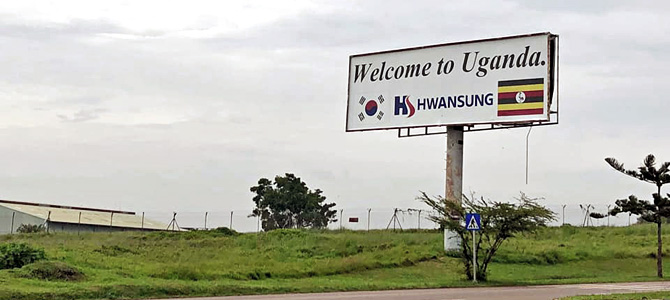
For the purpose of institutional development of our organization, but also to exchange best practices, a part of our team, Tatiana Costev and Lilia Sula, visited Uganda, considered the pearl of Africa, 7500 km away from Moldova.
During this visit a number of 7 organisations from Pakistan, India, Brazil, USA, Hong Kong, Uganda and Moldova discussed the concept of Power Transfer within an organisation as well as while working with the community.
The participants discussed the importance of change and innovation within their own organisations, improving organisational capacity, and the drivers for change. The multinational team focused on the topic of a regularly updated strategic vision, capable of responding to the reality we live in.
Together we studied the effects of the four types of power to strengthen sustainable organisations and teams:
- Inner power: the personal power that helps you overcome limits of any kind to create the living conditions you dream of and deserve.
- Power with: collective power through organisation, solidarity and joint action.
- Power of: the ability to decide and achieve.
- Power over: the power of the powerful or empowered over others.
“Participating in the activities of the joint working days, I realised that we are all much more creative and talented than we think we are, and we don’t realise that we can use our talents to bring about change for mutual benefit.” – Lilia Sula, the Programme Coordinator, iRi.
“The challenge of transformative leaders is to make the invisible visible, not only to adapt to new reality, but also to critique and offer alternatives on all dimensions of our life.” – Titos Escueta, the Capacity Development Advisor, Global Fund for Children representative, Hong Kong.
One of the key findings was that generating empowering attitudes requires intentional actions that lead to increasing organisational capacity and creating an internal mind-set that promotes change. This included telling stories of successes within our organisations, the challenges we face, reflecting on the changes needed and what to improve.
This meeting provided a big platform to discuss the success of the organisation and the people who work for the organisation could share their experience.
In addition to the training activity, participants also visited 5 rural communities in Uganda, where they met with local people, children and teachers. They discussed community development and empowerment practices. The host organisation FICH, which facilitated the visit, told about the initiatives they are implementing locally, the results and the challenges they face.
“We have noticed that woman is the head of the family in rural area; women are most involved in community life, they earn money to keep their families, take care of the children, work in the fields, participate in women’s empowerment programmes and take an interest in children’s schooling.” – Lilia Sula, the Programme Coordinator, iRi.
“It was one of the most exciting and beautiful experiences for the iRi team. Uganda is not only a beautiful country, it also has a favourable climate for year-round farming, green landscapes, open-minded people and delicious cuisine.” – Tatiana Costev, the Programme Director, iRi.
This event is part of Step Up Program, the 2nd edition, organised by the Global Fund for Children Foundation, Washington, USA.
For a virtual visit to Uganda visit the Institute for Rural Initiatives (iRi) Facebook page: