
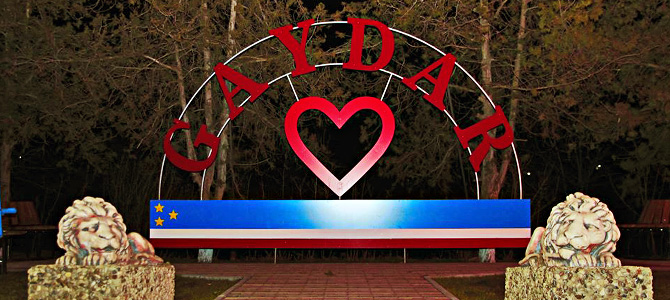
Today, on the 22nd of April 2020, the first Local Coalition was formed up in the region of Gagauzia ATU, namely in the village of Gaidar, Ceadir-Lunga district. The coalition was formed up online within a session attended by 10 members. The coalition was officially adopted by approving the Regulation of the Local Coalition Activity.
During the conference, the members of the Local Coalition took a virtual tour of the website of the project Bugetulmeu.md in order to present the available resources that can be accessed by them to better familiarize themselves with the concept of Participatory Budgeting.
“Before getting deep into the project, we did not pay too much attention to the need for inviting citizens to participate in the budget process. It was an obvious and routine process. We suppose the category of ‘Participatory Budgeting’ can be added to the budget for 2021 in the village of Gaidar, and here we count a lot on the involvement and participation of citizens,” Galina Capsomun said, the secretary of the LPA.
The LC Secretary, Mrs. Curu Valentina, thanked the LC members for accepting the invitation to participate and to comply with the new circumstances, counting on their further engagement and contribution: “We are going to invite new members interested in this topic.”
“Together we will manage to achieve good results through friendly collaboration of the LC with the LPAs,” Mr. Iulian Rusu said.
The meeting was facilitated by Mrs. Tatiana Costev, the Programme Director, Institute for Rural Initiatives, and Mr. Iulian Rusu, the Deputy Executive Director, Institute for European Policies and Reforms.
The event was organised by the partner organisation, the Institute for Rural Initiatives.
The project “Inform, empower and act! Civil society for better budget governance in Moldova” is implemented by the Independent Analytical Centre “Expert-Grup” as the lead partner, together with Konrad Adenauer Stiftung e.V. (KAS, Germany), the Centre for East European Studies (CSEE, Lithuania) and the Institute for European Policies and Reforms (IPRE). The project is implemented with financial support of the European Union and Konrad Adenauer Stiftung e.V.