
The Independent Analytical Centre “Expert-Grup” in cooperation with the Institute for European Policies and Reforms (IPRE) organised on Friday, November 27, 2020, the First Annual Forum on budgetary participation within the project “Inform, empower and act! Civil society for better budget governance in Moldova”, co-funded by the European Union and the Konrad Adenauer Foundation.
The event, which took place online, reflected the opportunities and challenges of implementing budget participation principles at the central and local level. The aim of the forum was to raise awareness among policy makers, local public authorities, civil society, the donors’ community and the media on the importance of transparency and budget participation as essential conditions for ensuring inclusiveness and effectiveness of the budget process.
In his welcome speech, Adrian Lupusor, the Executive Director, Independent Analytical Centre “Expert-Grup”, said: “The event is launched in a very important context, as local public authorities are currently working and having consultation on local budgets for next year, and through this forum we want to motivate mayors to become more open to the participatory concept of budgeting. Involving local communities in the budget process is crucial to ensure efficient management of resources and to increase the role of local budgets in local development processes.”
For his part, Adrian Ermurachi, Deputy Secretary General of the Government of the Republic of Moldova, said: “It is very important for citizens to be consulted on issues of particular importance for the community, those of local interest, such as improving road infrastructure, health care services, installation of water supply systems, etc., as well as being involved in the drafting of decisions. The trust of citizens in public administration is one of the fundamental aspects of democracy and the level of citizen involvement in decision-making processes is closely related to the quality of public administration and its ability to engage constructively with citizens. The quality of life and comfort of citizens in a democratic state depends on the quality of governance.”
“The European Union encourages the promotion of an active role of Moldovan citizens and civil society organisations in the process of monitoring reforms. The Republic of Moldova has made significant progress in establishing a legal framework on transparency of public finances and involvement of civil society in the budgetary process. However, there are multiple challenges in implementing these practices, especially at the local level. Providing public access to information on budget processes at the local level will contribute to budget transparency and have a positive impact on socio-economic and human development indicators, as well as contribute to increasing competitiveness and reducing corruption,” Gintautas Baranauskas, the Deputy Head of Operations, Delegation of the European Union to Moldova said.
Stephan Malerius, Deputy Head of Finance and Project Management, Konrad Foundation (KAS), Germany, says: “Public budgets are the basis for development. They are an essential tool to cover the needs of citizens, be it in health, education or other relevant fields. The most important thing is that all potential resources are generated and used efficiently to provide public services. Here we are talking about transparency and how the government spreads the message across to the private sector and what is the effect of the social impact of these decisions. We need to focus on building trust–based relationship with citizens. Budgetary participation is one of the most democratic tools and it is related to mobilising citizens through policies designed to bring efficiency. It is a big responsibility to include people in this process, because this is how the community decides how public money is spent, bringing maximum transparency.”
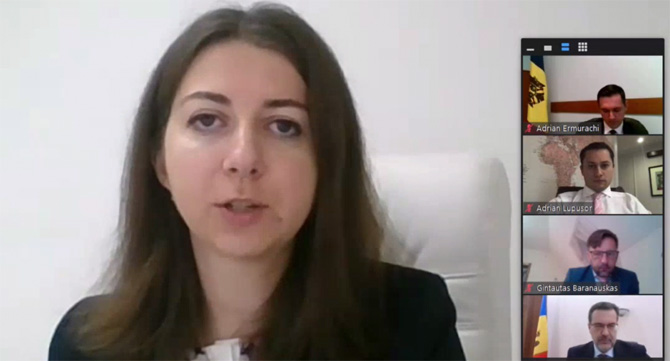
“Participatory budgeting should primarily aim to improve the quality of life in community by encouraging citizens to get involved in defining priorities and investment objectives in the local budget. It must be an open, transparent and inclusive process where community members are directly involved in formulating decisions on priorities for spending local budget money,” Tatiana Ivanicichina, State Secretary, Ministry of Finance said.
The event was structured in two panels. The participants in the first panel, moderated by Iulian Groza, the Executive Director of IPRE, discussed strategic directions at the high level on the current state of transparency and openness of the budgetary process, recent trends in the region in terms of budgetary participation, as well as the strategic vision on promoting budgetary participation in the Republic of Moldova.
Igor Munteanu, the Chairman of the Parliamentary Committee “Public Finance Control Committee”, declared: “Budgetary transparency is a factor of veto and raising awareness of all public institutions in a democratic state, as well as a guarantee of increased trust of citizens and external partners in the decision-making process. Therefore, enhancing mechanisms for citizen participation in this pluralistic process is a condition for the vitality of the political system and the legitimacy of democratic process. Our Commission carries out parliamentary scrutiny of the way the state institutions collect financial resources and assess audit reports. I want to make some conclusions. Firstly, performance has unfortunately not become the central criterion in the allocation of public resources and their use. Secondly, the strategic budget planning process continues to be difficult and non-transparent, and decisions are often politicised and flawed. These shortcomings are hampering the achievement of good budgetary transparency and it is imperative to empower the actors involved to establish a macro-financial framework that would be as realistic as possible.”
For his part, Marian Lupu, the President of the Court of Auditors, said: “An orderly, transparent and efficient system of tax collection and the proper use of these funds is in fact the very basis of the state (…). As a representative of the Court of Auditors of the Republic of Moldova, I have a very firm institutional position supporting this initiative and announce our full openness to participate in these processes together with other colleagues from the Central and Local Public Administration and representatives of civil society.”
The second panel, moderated by Ruslan Stanga, the Executive Director of the Institute for Rural Initiatives, guided expert-level discussions based on the statements and opinions of the first panel. Discussions were focused on existing constraints and practical approaches to overcome these constraints affecting the promotion of budget participation at the central and local level.
Elena Pereu, Deputy Mayor of Straseni town, said: “Our City Hall has always opted for participatory budgeting for citizens. Any draft budget, annual development plan, local policy is developed with the participation and consultation of citizens. The regular agenda of the authorities includes meetings on the spot with citizens, before starting any project. We have a Regulation with financial participation of citizens in the projects of the locality, and 70% is the amount of citizens’ contribution and the rest 30% is from the local budget. We have also signed a cooperation agreement with local public associations for better cooperation. Thanks to the support of the project, the Local Coalition was created and the Memorandum of Cooperation was signed. All the activities within the project strengthen the capacity of the local public authorities for better governance, which is focused on the needs and interests of citizens.”
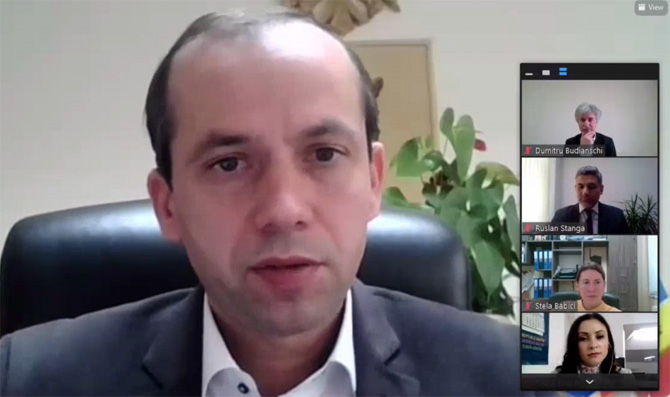
“The town of Cahul was the first local authority in the country which in 2007, at our request, at the request of civil society, approved a percentage of the local budget for project competition (…). Last year the Council approved a regulation for budgetary participation. For the budget of 2020 we put aside one million lei and we had up to 14 projects that are under way now. For 2021 we have planned about 1.3 million lei and so far we already have more than 30 projects with the budgets up to 100 thousand lei,” Nicolae Dandis, the Mayor of Cahul municipality said.
For his part, Giovanni Allegretti, Senior Researcher, CSS (Centre for Social Studies) – University of Coimbra, Portugal, said: “It is important to underline the need to expand Local Coalitions from the local to the national level. In a society we need more coalitions because there are different important issues. Portugal has taken an important step in participatory budgeting. In two regions the projects related to participatory budgeting have been implemented in schools and the second is related to the general state budget. But it is important to mention that the focus is on the younger generation and one of the reasons is that since 2014 a network of mayors has been created, who are actively involved in participatory budgeting. They show the state that they become more transparent and ask the state to do similar things at the regional and local level. Such a model could also be implemented in Moldova.”
Watch a replay of the Annual Forum on Participatory Budgeting here.
The project “Inform, empower and act! Civil society for better budget governance in Moldova”, is implemented by the Independent Analytical Centre “Expert-Grup”, as the lead partner, together with Konrad Adenauer Stiftung e.V. (KAS, Germany), the Centre for East European Studies (CSEE, Lithuania) and the Institute for European Policies and Reforms (IPRE). The project is implemented with the financial support of the European Union and Konrad Adenauer Stiftung e.V.